Howard Lederer 2p2 PokerCast
I finished up listening to the Howard Lederer 2p2 PokerCast with Mike and Adam last night. Another, somewhat painful, three hours of Howard rehashing the rise and fall of Full Tilt…
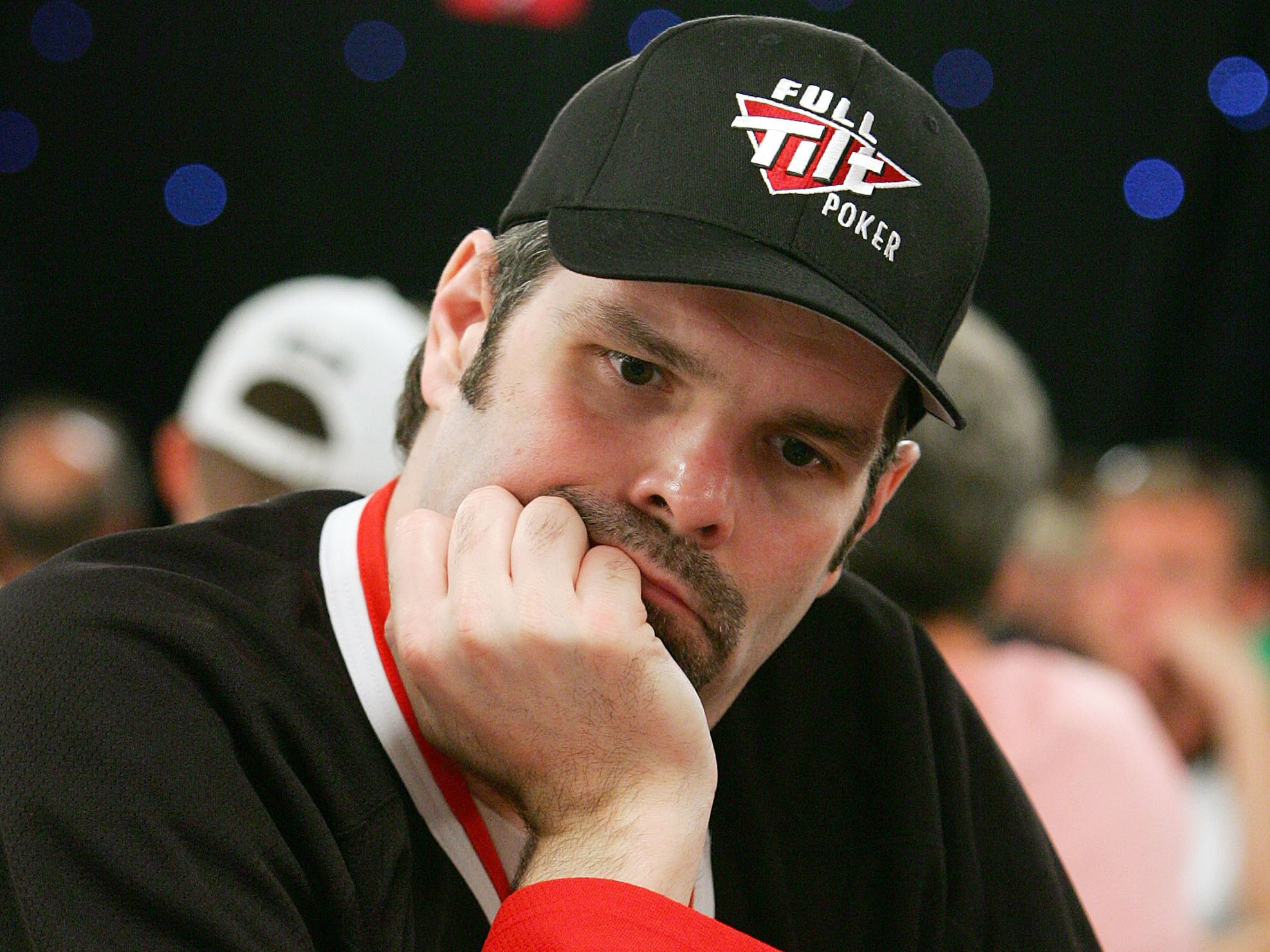
I finished up listening to the Howard Lederer 2p2 PokerCast with Mike and Adam last night. Another, somewhat painful, three hours of Howard rehashing the rise and fall of Full Tilt Poker. I say painful because between the PokerNews interview and this, I’ve endured 6.5 hours of this story. A story where only about 1 - 2 hours is of any real consequence.
I originally had planned on approaching this interview in a live blogging format. In fact, I named my scratch file “HL Live Blog” but after hearing the first few minutes I knew that this might not be the best format to capture what’s really important. Still, I made notes in a live blogging format and just my notes ended up being over 17,000 words.
Anyway, I’ve decided to do this in a somewhat topical style format and leave out the parts of the interview that have little probative value.
But before I get into the meat of the interview, I was made aware of a really excellent blog post by MicroRoller titled, Is Howard Lederer a Master Manipulator? It’s a good read because MicroRoller cites a book on manipulative behavior and gives instance by instance examples from the Parvis interview which seem to indicate that many of Howard’s evasive answers are actually documented techniques that manipulative people use.
For instance, check this “Playing the Servant Role” definition as described in the book:
Covert-aggressives use this tactic to cloak their self-serving agendas in the guise of service to a more noble cause. It’s a common tactic but difficult to recognize. By pretending to be working hard on someone else’s behalf, covert-aggressives conceal their own ambition, desire for power, and quest for a position of dominance over others.
Anyway, give his post a read. It’s very informative.
The Job of the Board, Oversight, and Independent Audits
Howard repeats his regret that the LLC’s operating agreement did not mandate oversight as stringent as it should have been.
Howard keeps saying that the operating agreement did not say that they could or should perform independent forensic accounting however, an independent audit is neither unusual nor unreasonable for any company. Especially for a company the size that Full Tilt had become before it crashed and burned.
In fact, as the company moved to Dublin in 2006 the technology team had several projects in the works that would have produced reports that were specifically designed to go to independent auditors in anticipation of going public in 2007 or 2008. So, the idea of having an independent accounting team audit Full Tilt’s books was not something that had ever been considered. While the projects were primarily focused on going public, there’s no reason why Full Tilt could not have brought in independent auditors after the UIGEA halted their plans of going public. It would certainly increase the value of the company in the future to have independently audited financials going back a few years.
Howard says that in 2005 or 2006 that they should have changed the scope of the operating agreement but he says that it was not the responsibility of the board. He says it was the job of the members to request that.
This is somewhat misleading because if the board had recommended to the members that the operating agreement be amended, it’s highly likely that the members would have welcomed increased oversight. While the board could not change the operating agreement themselves, as custodians of the company, they did have a responsibility to make these types of suggestions to the members and put it to a vote.
It’s also misleading because he later says that if the numbers are obviously wrong or if one had strong suspicions that the numbers weren’t right they had a “responsibility” to question them. So which is it? Either the board had no duties to check the accuracy of the books or it did. You can’t say that the charter specifically prevented you from questioning the numbers but the board had a responsibility to ensure the accuracy of the company’s financial numbers.
Howard states that the operating agreement specifically has a clause that says that the board is to trust the numbers supplied by management and does not have a right to demand an audit. If this is actually true, this seems like the most poorly executed LLC operating agreement ever written or it was written specifically to avoid having management questioned. Why in the world would you put a clause in the operating agreement that prevented the board from questioning the numbers? It’s not standard boilerplate so it had to have been specifically requested. What’s the point of even having a board if they can’t question the numbers?
It has been reported by Howard, Andy, as well as the anti-Ray camp that people had accused Ray of stealing from the company for years. Supposedly, Ray challenged anybody who doubted him to come to Dublin and review the books.
With this ongoing tension, with so many doubts about Ray’s handling of company funds, how did the board as well as the company’s legal council not recommend independent audits? Ray should have welcomed the chance to clear his name. Sure, you might not believe Ray and Gil but if a top-tier accounting firm attests to the accuracy of the numbers, that sort of puts all of the accusations against Ray to bed.
And keep in mind, independent audits are not unusual in the business world. Nearly every large company I’ve ever worked for had independent auditors who periodically went through the books, double checked the figures, and advised the board on the reliability of the financial reports being produced.
This is not seen as an issue of trust between the board and company management. This is seen as responsible board governance. They owe it as a duty to the shareholders who elected them to represent them on the board.
AGCC Oversite of Full Tilt’s Financials
Howard attempts to put the responsibility of keeping the company’s management in check on the AGCC saying that they were supposed to have oversight. He says that he was led to believe that the AGCC conducted onsite audits of the company.
But, couldn’t that have been made certain by simply asking Ray or Gil if the AGCC was conducting onsite audits? Did the board never ask that question?
Full Tilt was regulated by the AGCC from 2009 - 2011. That’s a good 2.5 - 3 years for the board to ask, “Hey Ray, when is the AGCC coming out to look at the books?” Apparently either the board didn’t ask or Ray lied.
The Board of Directors and Inaccurate Comparisons
Howard points out that the company would have been better served if shareholders had elected a new board. He says that a board that does not change frequently can become too comfortable and complacent. I agree with this but, as usual, Howard makes it sound as if someone with a 1% stake should have taken this up on their own and forced a vote when some of the largest shareholders were currently sitting on the board and could have easily pushed for an annual election of board members or suggested changes. This constant pushing the responsibility onto the members along and Howard’s previous “if you don’t like it, form a coalition and vote us out” attitude in the Parvis interview make it hard to believe that this was a viable option.
And, it still doesn’t address the fact that as leaders and founders of the company, this was their responsibility. If they thought the board needed turnover, they’re the people who should have suggested it.
And if the investors didn’t want to take on the duties, and there are plenty of reasons why one might not want that responsibility, they could have hired professional board members. That’s a fact that has not been addressed in any of the interviews.
Then Howard goes into some of the most crazy analogies and comparisons I have ever heard. He talks about how difficult it would have been to get outside board members for a US facing online poker company. Uhm, could that be because what they were doing was illegal? Shouldn’t that have been the big tipoff that maybe their “poker is a game of skill, gaming laws don’t apply to us” arguments were less than compelling?
But he doesn’t stop there. He cites as evidence of how difficult it would have been, Gabby Campos’ short tenure as CEO of PokerStars and the bwin/PartyGaming merger. He sort of implies that Gabby was unsuccessful because he was not a founder and that Party’s financial performance was due to the founders stepping back.
Okay, first off, let’s completely ignore the thousands upon thousands of companies that have prospered after the founders stepped back and look at these two comparisons.
Gabby Campos was brought in AND Isai and Mark Sheinberg stayed on at the company running things. The problem was not that the founders stepped away but that the founders didn’t step away.
And Party’s challenges stem more from the highly competitive environment created by pulling out of the US market which basically ceded to Stars and Tilt the US market. A market that they then used to finance highly aggressive marketing campaigns in Europe and the rest of the world which have drive up player acquisition costs and driven down overall player lifetime value for every operator competing in the ROW market.
But more importantly, Party’s issues have nothing to do with the original founders stepping away from the company. The founders, technically, stepped away in 2005 or 2006 when PartyGaming became a publicly traded company. And the company performed pretty well. They were still the largest poker room in the world right up to the passage of the UIGEA.
The above is one of the reasons why I recommended reading MicroRoller’s post first. This is clearly an example of manipulation. The question was about the lack of board turnover and the difficulty in finding professional management to run Full Tilt. The answer that Howard gives doesn’t even stand up to casual inspection but it’s effective in diverting the line of questioning.
Member Rumblings After Distributions
Howard later says that after distributions started that their wasn’t even the faintest rumblings of unhappiness with Ray’s performance by the membership. However, Andy Bloch, in his interview, specifically references the fact that members were questioning where the money was going if earnings were increasing but distributions had not increased in 3 years. Likewise both Howard and Andy have mentioned that Ray challenged the members to come out to Dublin and inspect the books. Since the distributions started less than a year after Tilt moved to Dublin, it seems that Howard’s memory is faulty since the questions would have most definitely occurred after distributions started.
Ray, Gil and Tyrants
Howard justifies not replacing Ray by going back to his completely flawed analogies of nobody wanting to take over as CEO of a US facing poker room. This is actually worse than when he first said it because this time he seems to imply they couldn’t even find a competent manager to take over. Previously he said that it didn’t work. Now he’s saying someone can’t be found. Nobody.
Uhm, but what about Gabby Campos, who Howard just mentioned? Campos left 888 and joined PokerStars, a US facing poker room. Campos is definitely one of the most respected executives in the industry so I’m finding it very, very, very hard to believe that they put any real effort into even looking for competent management.
The fact is, they didn’t even look. The option was not even entertained. If you’re looking for a CEO you hire a professional recruitment firm who goes out and gets you candidates. The lack of mention of the board having approved an executive search to replace Ray basically says that they didn’t make any real effort whatsoever to find a replacement for Ray (even after Ray said he would not object to stepping down in 2009).
Howard explains how Gil came to power within Tilt. The board did not approve Gil’s hiring. According to Howard, that was not a board responsibility.
When confronted with the Reddit post about Gil being a bit of a Machiavellian tyrant who kept groups separated so nobody knew too much about how the company was run, Howard says that he wasn’t experienced enough to evaluate that claim.
I’m sorry but that doesn’t sound like a healthy work environment regardless of your corporate work experience. I can’t imagine that anybody would think that this would be a good thing.
Howard sort of steps into a bit of shit when he says that the reason he never confronted Gil after the shortfall was discovered was because he didn’t want to make Gil feel “uncomfortable.” Mike and Adam jump all over that and specifically the use of the word “uncomfortable” which Howard backtracks a bit on and then says that they needed Gil in the short-term and that since he would have no future role in the company after a sale that there was no need to attack him.
But that sort of begs the question why Ray and Gil still get a walk from Howard today. According to Howard, Ivey, Juanda, Phil Gordon, Perry, and Lindgren are all worthy of having their dirty laundry aired but making Gil or Ray “uncomfortable” or solidly assigning them any blame seems to beyond what Howard is willing to go on record with.
Also, I don’t buy this whole thing about Ray or Gil being indispensable. According to Howard’s own account, Ray and Gil produced false financial reports from sometime around Aug 2010 through finally admitting the deposit backlog on April 7, 2011. I don’t know how Ray and Gil can even be trusted, let alone, considered so integral that they were kept on in their current roles.
And in the Parvis interview, Howard says that when they made the first statement about player funds being “safe and secure” after Black Friday that the board was led to believe this to be true by people who knew it wasn’t. Hmmmm … anybody want to take a guess at who knew and didn’t correct the board before that statement went out? Oh, must have been the indispensable duo of Ray and Gil.
And, last but not least, if President Nixon could resign from the position of President of the United States with less than 24 hours notice, I find it beyond imagination that Ray and Gil were so integral to Full Tilt Poker that they couldn’t have been fired on the spot and an independent auditor could not have come in to give the board members a fully audited financial picture of the company’s health.
I mean, this guy just got done lying to you for months. Why did anyone have any expectation that Ray wasn’t hiding more bodies somewhere? My greatest fear if I was a board member would have been Ray and Gil having access and the ability to hide further wrongdoings they may have already committed.
And later in the interview, Howard admits that Ray did screw the company after Black Friday. Ray refused to accept the board’s suggestion that he quit taking pay. The board eventually negotiated a $70,000 a month salary with Ray. But after agreeing to $70,000 a month he still continued to pay himself $200,000 a month.
To their credit, Mike and Adam also jump all over this and point out that it’s crazy not to fire that person right on the spot. That letting them stay allows them to cover up their crimes even more. In most situations you wouldn’t even be allowed to return to your office to collect your stuff. You would be escorted off company property by security.
You can hear Howard’s discomfort on this as he scrambles to come up with an explanation. The best he can do is say that he felt it was in the best interests of the customers who might not have ever seen a deal with players getting paid back if they had fired Ray and Gil and not understood how the company operated.
But Mike and Adam won’t let it go and they ask whether or not the AGCC would have worked with them on quickly getting a new CEO licensed and Howard admits that he thinks that they would have worked with the company. But he sticks to his guns on the point saying that with a room full of lawyers, the DOJ investigation, the board’s oversight (LOL), that Ray and Gil wouldn’t have dared try anything. WTF?!?! Really? Didn’t we just establish that Ray went behind the board’s back and continued to pay himself $200K a month after agreeing to only accept $70K?
And I don’t entirely believe Howard’s analysis anyway (even if it didn’t turn out to be untrue). No blue-chip kind of money is going to look at Full Tilt with Ray as CEO even if the plan is to eventually sack him once a deal is complete. No reputable hedge fund or other investment firm is going to want to sit down with a guy under DOJ indictment and try to hammer out a deal. Would you want to do a deal with the CEO and CFO of a company that has admitted to cooking the books?
But Howard’s argument is sort of circular logic. They weren’t getting any interest from tier one investors so in Howard’s mind something like this would not have been a problem. But the reason they weren’t getting more offers and from higher caliber investors was because Ray was still CEO.
Howard stops at this point and clarifies saying that he is explaining the logic of how they decision to keep Ray and Gil was arrived at. In retrospect, he admits it may not have been the wise choice.
His argument seems to be that they thought they could do this deal quickly and get players paid back. They had no idea at the time that they had as much time they did.
Again, I don’t buy this. First off, keeping Ray and Gil on after they admitted to committing fraud against the board and shareholders is indefensible. Period. They were not even trusted by shareholders before this so after finally admitting they had been lying, but on a much bigger scale than anybody had ever imagined, I can’t see how they would not be a hinderance to getting shareholders to come together.
Second, after August or September of 2011 when Alderney pulled their licenses, all of their reasons for keeping Gil and Ray just went away. They should have taken 30 - 60 days, hired an outside forensic accounting team, a temporary CEO, and put the company into a state where it could be easily sold. Better yet, they probably could have found someone that cost less than $200,000 a month.
Distribution Payments Made in Error
One interesting point that did come out though was the discussion on paying back distributions in error. Howard admits that he didn’t pay back his distributions and says it was because nobody else would. He says that the only way it worked is if everyone did it and since they didn’t his returning his distributions would not have been helpful.
He specifically says that they couldn’t get members to pay back their loans so getting them to pay back distributions was a “pipe dream.” But, many members (and even some non-members who were loaned money) have said they would have paid back the loans and distributions if their concerns about Ray were addressed. They were concerned about their money going to pay Ray’s salary and the possibility that Ray would further mismanage the incoming funds.
But the board did nothing to address those concerns other than to call those people unhelpful.
The most damning part about this was when Mike and Adam keep pressing Howard about why he didn’t return the distributions he personally received in error. He clearly knew they were in error. Howard dances around at first but Mike and Adam point out this is a personal choice based on your own sense of right and wrong. You don’t need all the other members to do it if you feel it’s the right thing to do. Howard eventually concedes it was his personal choice not to give the money back.
Jesus Becomes a Little Less Saintly
Another interesting point that came up during this discussion was the infamous $14 million Chris Ferguson returned for which Howard bequeathed sainthood on Chris for doing. In this interview, it comes out that $9 million was unpaid and sitting in a Full Tilt bank account and the other $5 million had been distributed on April 15th before the Black Friday indictments had been announced. I’m not sure how saintly it was that he basically returned money he couldn’t access ($9 million) and money paid on the 15th which would look exceptionally bad had he kept it.
Howard Has No Idea What Segregated Accounts Are
In discussing segregation of funds, Mike and Adam sort of dropped the ball a bit. Mostly because I don’t think that they completely understand account segregation. Howard is able to slip out of the questions by claiming that having many different bank accounts instead of one trust account was better for players (in his mind). As Howard put it, if the DOJ seized that one account they would be out of business.
The real issue is not the logistics of one account vs. many. You can have segregated funds spread out over as many bank accounts as you wish as long as they’re all designated player funds. The problem was mingling Full Tilt money with player money which made it easier to tap player funds when the Full Tilt funds ran out.
Probably the best way to illustrate the issue is to think about saving up for Christmas gifts at the end of the year. It’s January and you know that in December you’re going to spend $1200 on gifts so you vow to set aside $100 per month for 12 months.
You could just earmark the $100 a month in your existing checking account. So, in Jan you would mentally calculate that your balance is really $100 less than what the bank shows. In Feb, you would mentally subtract $200 from your account balance. And so on and so on.
Now, this can work but it’s far from foolproof. It’s also tempting to dip into your Christmas savings for various reasons like an unexpected car repair bill or something. This was, basically, how Full Tilt was managing funds.
Another option might be to set up a separate savings account and you would move $100 from your checking account into your savings account every month. This money is harder to touch because accessing it is a conscious decision. This is what would be more like segregated player accounts. Player funds are in one account and your operating funds are held in a completely distinct account.
Now, here’s where Howard is sort of clouding the issue. I can open up 10 accounts at 10 different banks and transfer $10 into each account each month. As long as the accounts are still distinct accounts and I only use them for my Christmas savings, they’re still segregated from my general checking account.
So when Howard makes it sound like a segregated account would have to be a single account or all of the funds would have to be held at a single bank he’s being a little disingenuous because that’s not what segregated accounts means. It just means that you have seperate accounts that only hold player funds. You don’t mix that money with your operating capital or any other money.
I discuss the whole issue of segregated accounts here. Maybe Howard should read that post because what he’s said in interviews so far betrays a total ignorance of how account segregation works.
Later in the interview, Mike and Adam bring this up again and Howard masterfully deflects by asking if they mean, trust accounts, which is not the same as segregated player accounts, which he can easily dismiss because trust accounts are a lot more hassle than a simple segregated account.
Howard’s Balance Sheet Razzle Dazzle
They move on to discussing the balance sheets and how the losses didn’t show. Again, Howard seems to be using his superior knowledge in this area to sidestep giving the answers people deserve and instead just debates the differences between a balance sheet and a P&L statement.
The point Mike and Adam were trying to get at is that if you have a balance sheet and it says that the company has $100 million cash on hand and then you hear about a seizure of Full Tilt bank accounts to the total of $40 million and the next month you get a balance sheet and it says that $100 million cash on hand, that should raise some eyebrows. What happened to the $40 million? Did we make an extra $40 million this month?
They do eventually pin Howard down on it and he somewhat admits (“I believe so” is the best answer he gives) that, basically, nobody asked where the money went. Ray and Gil simply showed them balance sheets that never properly accounted for the seizures. Basically, they counted the money as still being on hand even though it had been seized by the DOJ and it was highly unlikely they would ever get it back.
To me, that just sounds insane. Like I said, if you get regular balance sheets and you have a rough idea how much the cash on hand fluctuates from report to report, when you don’t see $40 million missing on the balance sheet and you obviously know that the DOJ has seized $40 million from you, how do you not ask?
This is the type of stuff a board is supposed to catch! If it was this easy to hide $40 million here and there, you could steal the company blind.
Player Loans
Howard says he can’t make excuses for the loans made to players. He seems to paint it in the light that they helped with the bigger buy-in games that drew a lot of buzz to Full Tilt, so in a way they company benefitted greatly from the loans.
I can’t say that this is factually incorrect because it’s hard to determine how much buzz the big games benefitted Full Tilt but one of Tilt’s former marketing people that I spoke with just laughed when I told him about Howard’s justification.
He then says that the specific way in which the loans were managed was not handled well.
This is why I have a bit of a problem with Howard’s interviews. He speaks about the loans in abstract. He says that loans weren’t handled well. But loans happened while he was at the company. He was one of the people who signed off on millions of dollars in loans. His style of distancing himself from the loans by talking about them as if they were something he was aware of but didn’t approve of in terms of how they were handled seems a little disingenuous.
This is especially true when he’s admitted having a $700,000 loan that he paid back after Black Friday (one of the things he pats himself on the back for repeatedly). Why did someone who had taken over $40 million in distributions need to borrow $700K from Full Tilt?
What many of these loans ended up being is interest free financing. Buy a house or a six figure car, Full Tilt finances it via a personal loan with no colateral backing it up. Full Tilt became a private bank for the players and owners of the company. They could request loans, pay them back whenever they wanted, avoid interest, avoid tax reporting responsibilities, etc.
And you also have to remember that money is power. Ray and Howard, as gateways between players and loans, could use that over people. To a certain degree, it’s very mob-like. You lend Mike Matusow a couple of hundred thousand and there’s nothing he can say “no” to.
Howard Dodges the Ray Question … AGAIN
Next is a lot of discussion about whether to keep the site up and running or to close it down once the full extent of the problems were known. Howard says in hindsight the right thing to do would have been to shut it down. He says that at the time, they didn’t feel the company would maintain it’s value if it was allowed to close operations until an investor or buyer was found. After seeing what happened after the site was forced to shut down, he can say that the valuation did not change enough to have warranted keeping the site going.
And then Ray’s $200K salary post-Black Friday gets discussed. Ray was asked by the board to quit taking salary, but he refused. When Mike and Adam ask Howard if the board had the power to hire and fire the CEO then, certainly, they had the power to adjust his salary. Howard dodges that one by throwing up some chaffe about not really understanding how that would work and the lawyers being unclear on how that would work.
And this is where I have a major, major, major problem with Howard in these interviews. Obviously, this is not going to look good. Many members have expressed an unwillingness to pitch in funds or repay loans as long as Ray is drawing a salary. Howard paints them as being unhelpful but the problem is … Ray’s still getting paid!
Instead of trying to convince people to accept something that should have been morally and ethically repulsive, allowing Ray to pay himself some of the money that people are going to have to pony up, they should have focused on not paying Ray in the first place.
According to Howard, they tried to convince him to take a pay cut to $20K a month but Ray rejected that proposal. It was finally agreed that Ray would pay himself $70K a month and Howard states that he later found out that Ray simply continued to pay himself $200K.
Again, I really want to jump through the computer and shake Mike and Adam for dropping the ball because they asked Howard a great question, about how Howard has thrown others under the bus but taken it relatively lightly on Ray, and Howard does a master job at deflecting and answers a completely unrelated question.
Instead of answering why he has been quick to throw accusations at Juanda, Ivey, Perry, etc and has been rather even mannered about Ray, Howard starts discussing how they felt they needed Ray to put together a deal.
Howard says he knew 100% that not firing Ray over the salary issue would come back to haunt him. But he says he made the decision, and felt it was the right decision, because he felt it would get the players paid back more quickly.
And Mike and Adam bite on that and totally forget that the question was, why had Howard left Ray relatively unscathed in his ire AFTER it was all over. Why hasn’t Howard come out and said, “Ray is evil incarnate and should rot in hell,” while he’s so quick to throw everyone else under the bus? That was the question!
I mean, this huge, huge, huge issue of Ray ignoring the board and continuing to pay himself a lavish salary only came up 2 hours into the interview. It never came up in the Parvis interview.
Yet, Howard had no problem launching into Ivey and Juanda without much prompting in the Parvis interview.
In fact, he speaks mockingly about the Transition 2.0 team wanting to collect $20K a month each for taking over as board members and managers. Their entire salaries combined aren’t even close to being equal to what Ray was paying just himself!
This is the issue here. In the entire 5.5 hours (3.5 hours of Parvis and this comes around 2 hours into the 2p2 interview), this is the first time he’s really put the blame on Ray for anything. Even the payment backlog he sort of gets all wishy-washy about saying only that he wishes Ray would have come to the board with the idea before doing it.
The Deals
Howard starts off on the topic answering a question by Mike and Adam where Howard says that no viable deals were turned down. He describes one deal where they wanted a 24 week exclusive on the company but he dismisses that as not being a viable deal.
But, as is all too common in these interviews, just moments after saying no viable deals were turned down, Howard then discusses why nobody responded to PokerStars who had expressed an interest in talking to Full Tilt.
I can fully understand why there may have been caution or even fear of talking with Stars but you can’t say that no deals were turned down and then a few minutes later detail how you blew off one someone who was holding out a lifeline.
I’m sure if pressed on it Howard can come up with some Clinton-esque sort of semantical difference between not turning down any deal and not responding to someone but it’s essentially the same thing.
Howard’s Sense of Ethics
Late in the interview Howard decides to demonstrate what a stand-up guy he is when he tells the story of how he was invited to hear a pitch from a mysterious billionaire. In a nutshell, the pitch was, declare bankruptcy in the US, screw over your US customers, we’ll buy the assets, and we’ll give you a chance to buy into the new company on the side without anyone knowing.
No, it’s not the absurdness of the deal that made me lose it. It was that Howard tells the story and then ends with, “I just walked out of the room … but, did I do the right thing?” You have to hear it (just after the 3 hour mark). It sound like he’s proud of not taking the deal. Sort of like, “See, I could have f*cked the US players but I’m such an ethical dude.”
I’m Way Too Awesome
Next they go off on a bit of a tangent asking a question that Tom Dwan posed to Howard on 2p2. Dwan asks, “What mistakes did Howard feel he made?” Howard pretty much comes off like the guy who comes in for a job interview and when you ask him about his faults he says, “Being way too awesome.” Nearly all of the faults and mistakes Howard lists aren’t really his faults or mistakes or were beyond his control. Like he rattles off stuff like, not being able to stop the Ivey lawsuit before it happened.
Mike and Adam press him a little more and ask if he thought it was a mistake not liquidating his own personal assets instead of asking people like Dwan for $1 million to help the company. Howard’s response is a very curt, “No.”
Then he has the audacity to say that he felt that his time and the work he was doing was more valuable. He was working so hard to get the players paid back and none of the other owners would pony up any cash so he feels that his time and effort are what he owed to the company.
Mike and Adam sort of keep hammering on him and lay out the fact that at the end of the day, the most damaging aspect to all of this is the money that Howard and the other owners received which was in error was not repaid. Howard circles back to the “But they wouldn’t repay the loans” argument which ignores that fact that this is truly a question of ethics.
He has money that he knows he wasn’t supposed to receive.
He won’t return that money unless everyone else does first.
Obviously, Howard does not feel that his failure to lead by example was a mistake as that was not one of the faults he mentioned earlier.
Should Ray Get Jail Time?
Finally, here’s Howard’s chance to show which side he’s standing on. Is he with the poker community or is Howard an out-of-touch, egotistical bastard?
Mike and Adam ask Howard if he believes that Ray should get jail time for his actions. Howard pauses a bit and then says it’s two answers. The first part of his answer he appeals to the poker community to side with him on in saying that online poker should not be illegal so Ray should not be prosecuted for that.
Okay, I’m with you, Howie. I disagree with your understanding of the law but I can agree with you on principle. Now bring it home and tell us Ray deserves to rot in a jail cell …
Nope, not going to happen. Howard cops out and says that he is not the DOJ, he’s not a judge, it’s not on him to decide.
Are you serious? Really?
My Final Thoughts
Well, the word counter thingy says I’m already at 6000+ words in this analysis so I’ll try to keep my conclusions on point.
When all is said and done, and after watching/listening to hours and hours of Howard make his case, I keep coming back to the psychological breakdown of manipulators that MicroRoller posted.
Howard’s inability to see the most obvious contradictions, incongruencies, and total failure to genuinely empathize with the players forces me to see his actions as self-serving. He tries to say the right words but then he ends up saying something else that demonstrates that those are only words.
I know what they went through was tough. Getting 23 people all pointed in the same direction is no easy feat. I can sympathize with the situation he was thrown into.
But when I look back on this business ethics video Howard did the 2p2 podcast and Lederer Files, they’re not the same person. Howard #1 knows the difference between right and wrong. Howard #2 fumbles, hedges, and gets a tad liberal with the truth.
I mean, he doesn’t seem to understand why he should have given back the distributions that were made in error. It’s not that he didn’t give it back, but he truly appears not to understand why it was the right thing to do.
And with his cop-out answer about Ray, it appears that he’s oblivious to the fact that Ray committed crimes. This isn’t a case where you need for a jury to decide guilt or innocence. Ray admitted to committing fraud when he told Howard about the payment backlog. He agreed to only taking $70K a month in salary and then paid himself $200K a month. That’s theft.
So, as a benefit to Howard, let me tell you what some of the correct answers should have been.
Should you have kept the distributions made in error?
No. I did keep the money and and it was wrong. I knew the money belonged to the players. But, when I saw everyone else not willing to even pay back their loans, I don’t know, it made me angry and I kept it more to spite them than to harm the players. It was wrong. It was a mistake. If I had it to do over again, I would have been the first one in the pot with the money. It was a very stressful time and I can’t say I’m proud of every decision I made. This is one of those choices I regret and will always regret.
Should Ray Bitar serve jail time?
Putting my personal feelings about Ray aside, Ray betrayed the trust of the players, the board members, the shareholders, and the entire poker community with his actions. There is no excuse for that. Is what he did criminal? I’m not a judge so I’m not qualified to discuss this on a legal level but, yes, sure, Ray deserves to answer for what he did. Even if he felt he was acting in the best interests of the company, there’s no excuse for putting player’s money at risk. I can’t defend that. Ever.
See, this is how people who are truly sorry and who take responsibility for their actions respond to questions like those. Many of Howard’s comments during both interviews make people angry because his answers give no real sense that Howard has taken any responsibility for what’s happened. Even when he pretends to take responsibility he usually backtracks on it a few moments later.
Overall, I give Howard an “D+” on image repair. While I think he earned a lot of respect even doing the interviews, his performance in the interviews left a lot to be desired.